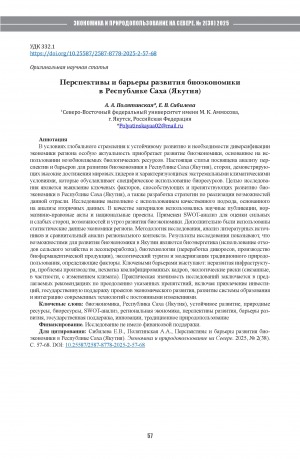
Перспективы и барьеры развития биоэкономики в Республике Саха (Якутия) = Prospects and barriers to the development of bioeconomy in the Sakha Republic (Yakutia)
Статья в журнале
Русский
332.14(571.56)
10.25587/2587-8778-2025-2-57-68
биоэкономика; Республика Саха (Якутия); устойчивое развитие; природные ресурсы; биоресурсы; SWOT-анализ; региональная экономика; перспективы развития; барьеры развития; государственная поддержка; инновации; традиционное природопользование; bioeconomy; Sakha Republic (Yakutia); sustainable development; natural resources; bioresources; SWOT analysis; regional economy; development prospects; development barriers; state support; innovations; traditional nature management
С. 57-68
Вестник Северо-Восточного федерального университета им. М. К. Аммосова = Vestnik of North-Eastern Federal Univercity: электронное научное периодическое издание
Якутск, Издательский дом СВФУ
Издается с 2016 г.
Выходит 4 раза в год
Вестник Северо-Восточного федерального университета им. М. К. Аммосова. Серия "Экономика. Социология. Культурология" : электронное научное периодическое издание / Федеральное государственное автономное образовательное учреждение высшего профессионального образования "Северо-Восточный федеральный университет имени М. К. Аммосова" ; главный редактор: А. Н. Николаев. — Якутск : Издательский дом СВФУ, 2016-. — Выходит 4 раза в год. — 2025, N 2 (38). – 93 с.
In the context of the global aspiration for sustainable development and the need to diversify the regional economy, the development of bioeconomy based on the use of renewable biological resources is of particular relevance. This article is devoted to the analysis of prospects and barriers to the development of bioeconomy in the Sakha Republic (Yakutia), parties demonstrating high achievements of world leaders and characterized by extreme climatic conditions, which determine the specific use of bioresources. The purpose of the study is to identify the key factors contributing to and hindering the development of bioeconomy in the Sakha Republic (Yakutia), as well as to develop a strategy for realizing the potential of this industry. The study was carried out using a qualitative approach based on the analysis of secondary data. The materials used were scientific publications, regulatory acts and national projects. A SWOT analysis was used to assess the strengths and weaknesses, opportunities and threats to the development of bioeconomy. Additionally, statistical data of the regional economy were used. Research methodology: an analysis of literary sources and a comparative analysis of the regional context. The results of the study show that the opportunities for the development of bioeconomy in Yakutia are bioenergy (use of agricultural waste and timber processing), biotechnology (processing of wild plants, production of biopharmaceutical products), ecotourism and modernization of traditional nature management, determining factors. The key barriers are: underdeveloped infrastructure, production problems, lack of qualified personnel, environmental risks (associated, in particular, with climate change). The practical significance of the research lies in the proposed recommendations for overcoming these obstacles, including attracting investment, state support for economic development projects, development of the education system and integration of modern technologies with constant changes in issues.
Полятинская, А. А.
Перспективы и барьеры развития биоэкономики в Республике Саха (Якутия) / А. А. Полятинская, Е. В. Сибилева ; Северо-Восточный федеральный университет им. М. К. Аммосова // Вестник Северо-Восточного федерального университета им. М. К. Аммосова. Серия "Экономика. Социология. Культурология". - 2025. - N 2 (38). - С. 57-68. - DOI: 10.25587/2587-8778-2025-2-57-68
DOI: 10.25587/2587-8778-2025-2-57-68
Войдите в систему, чтобы открыть документ


QR-код документа

Как сканировать QR-код?
Для пользователей Android:
- Скачайте приложение для сканирования QR-кодов (Google Play)
- Откройте скачанное приложение;
- Наведите камеру на QR-код.
Для пользователей iPhone:
- Откройте приложение "Камера";
- Наведите камеру на QR-код;
- Нажмите на всплывающее уведомление.