Дьяконов А. К. Документы 1 - 1 из 1
1.
Количество страниц: 3 с.
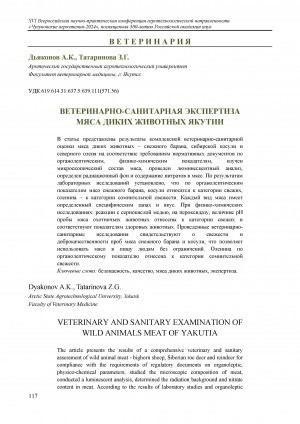
В статье представлены результаты комплексной ветеринарно-санитарной оценки мяса диких животных – снежного барана, сибирской косули и северного оленя на соответствие требованиям нормативных документов по органолептическим, физико-химическим показателям, изучен микроскопический состав мяса, проведен люминесцентный анализ, определен радиационный фон и содержание нитратов в мясе. По результатам лабораторных исследований установлено, что по органолептическим показателям мясо снежного барана, косули относятся к категории свежих, оленина – к категории сомнительной свежести. Каждый вид мяса имеет определенный специфическим запах и вкус. При физико-химических исследованиях: реакции с сернокислой медью, на пероксидазу, величине рН пробы мяса охотничьих животных отнесены к категории свежих и соответствуют показателям здоровых животных. Проведенные ветеринарно-санитарные исследования свидетельствуют о свежести и доброкачественности проб мяса снежного барана и косули, что позволяет использовать мясо в пищу людям без ограничений. Оленина по органолептическому показателю отнесена к категории сомнительной свежести.
The article presents the results of a comprehensive veterinary and sanitary assessment of wild animal meat - bighorn sheep, Siberian roe deer and reindeer for compliance with the requirements of regulatory documents on organoleptic, physico-chemical parameters, studied the microscopic composition of meat, conducted a luminescent analysis, determined the radiation background and nitrate content in meat. According to the results of laboratory studies and organoleptic indicators, bighorn sheep meat, roe deer belong to the category of fresh, venison to the category of questionable freshness. Each type of meat has a certain specific smell and taste. According to the physico-chemical studies: reactions with copper sulfate, peroxidase, pH value of meat samples of hunting animals are classified as fresh and correspond to the indicators of healthy animals. The conducted veterinary and sanitary studies indicate the freshness and good quality of samples of bighorn sheep and roe deer meat, which allows people to use meat for food without restrictions. Venison is classified as doubtful freshness according to the organoleptic index.
The article presents the results of a comprehensive veterinary and sanitary assessment of wild animal meat - bighorn sheep, Siberian roe deer and reindeer for compliance with the requirements of regulatory documents on organoleptic, physico-chemical parameters, studied the microscopic composition of meat, conducted a luminescent analysis, determined the radiation background and nitrate content in meat. According to the results of laboratory studies and organoleptic indicators, bighorn sheep meat, roe deer belong to the category of fresh, venison to the category of questionable freshness. Each type of meat has a certain specific smell and taste. According to the physico-chemical studies: reactions with copper sulfate, peroxidase, pH value of meat samples of hunting animals are classified as fresh and correspond to the indicators of healthy animals. The conducted veterinary and sanitary studies indicate the freshness and good quality of samples of bighorn sheep and roe deer meat, which allows people to use meat for food without restrictions. Venison is classified as doubtful freshness according to the organoleptic index.
Дьяконов, А. К.
Ветеринарно-санитарная экспертиза мяса диких животных Якутии / Дьяконов А. К., Татаринова З. Г. ; ФГБОУ ВО "Арктический государственный агротехнологический университет", Факультет ветеринарной медицины // Чугуновские агрочтения : сборник научных статей по материалам XVI Всероссийской научно-практической конференции агротехнологической направленности "Чугуновские агрочтения", посвященной 300-летию Российской академии наук, 3-4 апреля 2024 г., г. Якутск. - Якутск : Издательский дом СВФУ, 2024. - С. 117-119.