Год выпуска: 2025

Количество страниц: 5 с.
- 1. Колодезников Игорь Иннокентьевич. Впечатления об удивительной книге
- 2. Лепов Валерий Валерьевич, Пудов Алексей Григорьевич. Идеология и будущее Республики Саха (Якутия) в государстве-цивилизации
- 3. Балакшин Георгий Дмитриевич. О якутском цикле стихотворений Евгения Евтушенко
- 4. Алексеев Владимир Романович. Холод и жизнь
- 5. Семенова Варвара Васильевна. Воссоздание традиционного кисломолочного продукта тара народа саха в современных условиях
- 6. Слодкевич Евгений Яковлевич, Находкин Николай Александрович. Совершенствование системы информирования населения о ЧС в Якутии на основе коротковолновой радиосвязи
- 7. Черосов Михаил Михайлович, Алексеева Ньургустана Михайловна. К 110-летию Георгия Павловича Коротова
- 8. Чаунина Наталья Владимировна. Итоги международной научно-практической конференции молодых учёных, аспирантов и студентов в г. Нерюнгри
- 9. Лепов Валерий Валерьевич, Голых Роман Николаевич. Конференция по математическому моделированию и автоматизации в наукограде Бийске
- 10. Кершенгольц Борис Моисеевич. О наиболее эволюционно древней рецепторно-регуляторной водосодержащей системе в организмах многоклеточных
- 11. Жукова Людмила Николаевна. Шаманские традиции лесных юкагиров в конце XIX – конце XX вв.
- 12. Киселев Валерий Васильевич. О становлении горной науки в Якутии
- 13. Данилова Вера Софроновна. Некоторые аспекты методологии исследования произведений искусства
- 14. Лепов Валерий Валерьевич. Международные усилия в области создания умных материалов
- 15. Сериков Сергей Иванович. Игарская геокриологическая лаборатория Института мерзлотоведения им. П. И. Мельникова СО РАН
- 16. Находкин Николай Александрович. Где находится земля Санникова?
- 17. Наука и техника в Якутии, 2024, №2 (47)
Николин, Е. Г. Незабудка Чекановского: история одной из таксономических загадок / Е. Г. Николин ; Институт биологических проблем криолитозоны СО РАН // Наука и техника в Якутии. - 2024. - N 2 (47). - C. 26-30. - DOI: 10.24412/1728-516Х-2024-2-26-30
DOI: 10.24412/1728-516Х-2024-2-26-30

Количество страниц: 13 с.
- 1. Колесова Лена Афанасьевна, Соловьева Марианна Иннокентьевна. Биоморфологическая изменчивость Allium splendens Willd. ex Schult. в условиях Центральной Якутии = Biomorphological variability of Allium splendens Willd. ex Schult. in the conditions of Central Yakutia
- 2. Bahel Benjamin, Yamb Emmanuel , Ngwem Blaise, Kenmogne Fabien, Kum Robert A., Safonova Mariya N., Fedotov Andrey A., Ammosova Nyurguyana E.. Mechanical behaviour of compressed earth blocks reinforced with random and aligned continuous distribution corn husk fibers = Механическое воздействие прессованных грунтовых блоков, армированных волокнами кукурузной шелухи с хаотичным непрерывным распределением
- 3. Васильева Акулина Александровна. Язык саха в сфере государственного и муниципального управления глазами служащих и населения г. Якутска Республики Саха (Якутия) = The Sakha language in state and municipal administration from the perspective of officials and the people of the Sakha Republic (Yakutia)
- 4. Сивцева-Максимова Прасковья Васильевна. Поэма А. Е. Кулаковского "Сон шамана": опыт анализа в аспекте проблем текстологии = Alexei Kulakovsky’s poem “The Shaman’s Dream”: an analysis focusing on textual criticism aspects
- 5. Рахлеева Айталина Владимировна. Семантика и прототипы образной светоцветовой лексики якутского языка = Semantics and prototypes of figurative light and color terms in the Yakut language
- 6. Титов Яков Нестерович. Перевод пьесы "Ночь Гельвера" И. Вилквистана якутский язык: анализ собственного перевода = Translating Ingmar Villqist’s “Helver’s Night” into Yakut: an analysis of a translation experience
- 7. Семенова Ирина Гаврильевна, Окорокова Варвара Гавриловна, Семенов Сергей Иннокентьевич, Окорокова Варвара Борисовна, Семенова Валентина Григорьевна. К юбилею ученого, литературного критика, педагога ЯГУ-СВФУ Гаврила Гавриловича Окорокова (1925–1990) = To the anniversary of Gavril Gavrilovich Okorokov (1925-1990), scientist, literary critic, academic of YSU-NEFU
- 8. Тарабукина Марфа Васильевна. Связующая нить поколений = The intergenerational thread
- 9. Вестник Северо-Восточного федерального университета им. М. К. Аммосова, 2025, №1 (99)
- 10. Вестник Северо-Восточного федерального университета им. М. К. Аммосова, 2025, №2 (100)
- 11. Вестник Северо-Восточного федерального университета им. М. К. Аммосова, 2025, №3 (101)
Historically, the Sakha people used plants in large quantities in their daily diet. According to A. Savvin’s list, there are 76 species of wild food plants used, representing 4% of the flora of Yakutia. However, 11 of these species remain unresolved and are exclusively referenced by Yakut names. Based on preliminary assessment, the plant kus tyla from this list has been identified as Lemna trisulca and the Lemnaceae family. A. Savvin’s list indicates that 59 species, representing 42 genera and 23 families, were used by Sakha people in fermented milk products and dishes. The families Rosaceae (7), Polygonaceae (6), Alliaceae (4), Ericaceae (4), and Asteraceae (4) are the most prominent in the dataset. The biomorphological spectrum of these 59 plant species includes 3 tree species, 9 shrubs species, and 3 dwarf shrub species, with the remaining species classified as perennial herbaceous plants. To continue research on food plants, the species list has to be consistent with modern scientific classification. This study identified 15 species, with 4 species reclassified to the level of genera. The identification of certain species, including Saussurea amara, Rheum rhaponticum, and Allium senescens, involved a comparative analysis of data from other sources. Traditionally, the Sakha people prepared diverse fermented milk products and dishes with the addition of plant ingredients, including leaves, roots and berries. Fermented milk soups, such as ас and үөрэ, exhibited the greatest botanical diversity, with up to 35 plant species were used in preparation. The sweet taste of the dishes kyobyuyor, dagda, kyuorchekh was given by the roots and berries of plants.
Семенова, В. В.
Пищевые растения, используемые в традиционных молочнокислых продуктах и блюдах народа саха / В. В. Семенова ; Институт биологических проблем криолитозоны СО РАН // Вестник Северо-Восточного федерального университета им. М. К. Аммосова. - 2025. - Т. 22, N 1 (99). - С. 16-28. - DOI: 10.25587/2222-5404-2025-22-1-16-28
DOI: 10.25587/2222-5404-2025-22-1-16-28

Количество страниц: 9 с.
- 1. Семенова Варвара Васильевна. Пищевые растения, используемые в традиционных молочнокислых продуктах и блюдах народа саха = Food plants used in traditional fermented milk products and dishes of the Sakha people
- 2. Bahel Benjamin, Yamb Emmanuel , Ngwem Blaise, Kenmogne Fabien, Kum Robert A., Safonova Mariya N., Fedotov Andrey A., Ammosova Nyurguyana E.. Mechanical behaviour of compressed earth blocks reinforced with random and aligned continuous distribution corn husk fibers = Механическое воздействие прессованных грунтовых блоков, армированных волокнами кукурузной шелухи с хаотичным непрерывным распределением
- 3. Васильева Акулина Александровна. Язык саха в сфере государственного и муниципального управления глазами служащих и населения г. Якутска Республики Саха (Якутия) = The Sakha language in state and municipal administration from the perspective of officials and the people of the Sakha Republic (Yakutia)
- 4. Сивцева-Максимова Прасковья Васильевна. Поэма А. Е. Кулаковского "Сон шамана": опыт анализа в аспекте проблем текстологии = Alexei Kulakovsky’s poem “The Shaman’s Dream”: an analysis focusing on textual criticism aspects
- 5. Рахлеева Айталина Владимировна. Семантика и прототипы образной светоцветовой лексики якутского языка = Semantics and prototypes of figurative light and color terms in the Yakut language
- 6. Титов Яков Нестерович. Перевод пьесы "Ночь Гельвера" И. Вилквистана якутский язык: анализ собственного перевода = Translating Ingmar Villqist’s “Helver’s Night” into Yakut: an analysis of a translation experience
- 7. Семенова Ирина Гаврильевна, Окорокова Варвара Гавриловна, Семенов Сергей Иннокентьевич, Окорокова Варвара Борисовна, Семенова Валентина Григорьевна. К юбилею ученого, литературного критика, педагога ЯГУ-СВФУ Гаврила Гавриловича Окорокова (1925–1990) = To the anniversary of Gavril Gavrilovich Okorokov (1925-1990), scientist, literary critic, academic of YSU-NEFU
- 8. Тарабукина Марфа Васильевна. Связующая нить поколений = The intergenerational thread
- 9. Вестник Северо-Восточного федерального университета им. М. К. Аммосова, 2025, №1 (99)
- 10. Вестник Северо-Восточного федерального университета им. М. К. Аммосова, 2025, №2 (100)
- 11. Вестник Северо-Восточного федерального университета им. М. К. Аммосова, 2025, №3 (101)
The features of different levels of anthropogenic impact on the biomorphological variability of vegetative organs of Allium splendens Willd. ex Schult. in the conditions of Central Yakutia are considered. The biological material for the study was collected in three geographically homogeneous growing areas in Central Yakutia with different degrees of anthropogenic pressure: in natural conditions with low anthropogenic pressure, in conditions of significant anthropogenic impact and in conditions of private introduction. It has been shown that the degree of anthropogenic pressure can be expressed in adaptive changes in plants, expressed in morphological and biochemical characteristics, the measurable indicators of which can differ significantly from the indicators of plants growing in favorable natural conditions or under optimal conditions of introduction. Morphometric variability of traits demonstrates manifestations of the protective component of variability by increasing variability for plants experiencing high anthropogenic pressure. It has been determined that anthropogenic oppression implements adaptation mechanisms through changes in habitus, in particular, the morphometry of the vegetative mass of leaves; negative environmental conditions cause a change in the ratio of age groups of individuals and a change in the reproduction strategy. In this case, the variability of the ascorbic acid content is more associated with the response to stress, realized through the choice of a reproduction strategy, since the amount of ascorbic acid did not correspond to the sequence of a series of morphometric variability, which can be explained by the dominance of the vegetative method of reproduction, in which biochemical processes actively occur in the underground part of the plant.
Колесова, Л. А.
Биоморфологическая изменчивость Alliums plendens Willd. ex Schult. в условиях Центральной Якутии / Л. А. Колесова, М. И Соловьева ; Северо-Восточный федеральный университет им. М. К. Аммосова // Вестник Северо-Восточного федерального университета им. М. К. Аммосова. - 2025. - Т. 22, N 1 (99). - С. 7-15. - DOI: 10.25587/2222-5404-2025-22-1-7-15
DOI: 10.25587/2222-5404-2025-22-1-7-15

Издательство: Просвещение
Год выпуска: 1978
Количество страниц: 282 с.
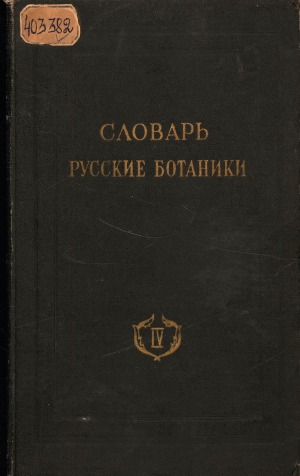
Издательство: издательство Московского общества испытателей природы
Год выпуска: 1952
Количество страниц: 652 с.
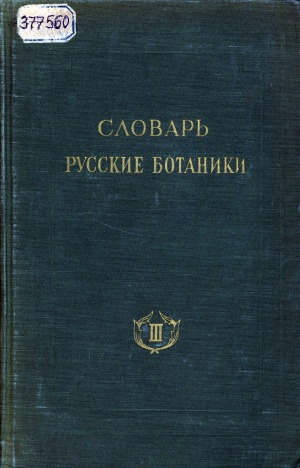
Издательство: издательство Московского общества испытателей природы
Год выпуска: 1950
Количество страниц: 504 с.
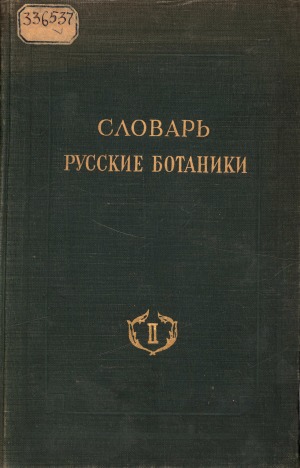
Издательство: издательство Московского общества испытателей природы
Год выпуска: 1947
Количество страниц: 342 с.

Издательство: Кинигэ издательствота
Год выпуска: 1980
Количество страниц: 180 с.