Место работы автора, адрес/электронная почта: Реабилитационный центр "Радуга" ; 677000, г. Якутск, пр. Ленина, 3/1 ; e-mail: raduga_ykt@mail.ru ; https://www.radugaykt.ru/
Ученая степень, ученое звание: канд. мед. наук
Область научных интересов: Детская неврология, эпилептология
ID Автора: SPIN-код: 2932-0100, РИНЦ AuthorID: 533476
Количество страниц: 9 с.
- 1. Игонина Светлана Викторовна. Медицинская тема в русской литературе = Medical theme in Russian literature
- 2. Баттахов Петр Петрович. Особенности правового регулирования территорий Дальневосточного федерального округа и Арктической зоны с преференциальным режимом = Peculiarities of legal regulation of the territories of the Far Eastern Federal District and the Arctic zone with preferential treatment
- 3. Дишкант Елена Валерьевна, Соловьева Мария Сергеевна. К 80-летию доктора педагогических наук, профессора Светланы Максимовны Петровой = On the 80th anniversary of Doctor of Pedagogical Sciences, Professor Svetlana Maksimovna Petrova
- 4. Неустроева Анна Николаевна. Профессор Августина Васильевна Иванова: учёный, педагог, созидатель = Professor Augustina Ivanova: scholar, teacher, creator
- 5. Калаврий Татьяна Юрьевна, Федоров Юрий Юрьевич. Адаптация методических рекомендаций к потенциалу опорного населенного пункта на примере городского поселения Алдан в Республике Саха (Якутия) = Adaptation of methodological recommendations to the potential of a key settlement: the case of the urban settlement of Aldan, Yakutia
- 6. Сибилева Елена Валерьевна, Ефимова Арина Александровна. Техногенные катастрофы и вызовы природопользованию в регионе Республика Саха (Якутия) = Man-made disasters and challenges to environmental management in the Sakha Republic (Yakutia)
- 7. Винокурова Марфа Александровна. Развитие событийного туризма на территории Республики Саха (Якутия) = Development of event tourism in the Republic of Sakha (Yakutia)
- 8. Ноева Елена Евгеньевна, Яндубаева Лидия Сергеевна . Исследование финансового потенциала муниципального образования Арктической зоны (на примере Жиганского района РС (Я) = A study of the financial potential of the municipality of the Arctic zone: the case of Zhigansky district of the Republic of Sakha (Yakutia))
- 9. Болотаева Ольга Сергеевна. Некоторые аспекты правового регулирования цифровых платформ в Российской Федерации = Some aspects of the legal regulation of digital platforms in the Russian Federation
- 10. Корякина Анжелина Анатольевна. Межкультурный мировоззренческий подход как стратегия воспитания личности = Intercultural worldview approach as a strategy for personality development
- 11. Ефимова Мария Прометеевна. Криминогенные детерминанты насильственного поведения в сфере семейных отношений = Criminogenic determinants of violent behavior in the field of family relations
- 12. Корякина Зинаида Ивановна. К вопросу об обязательном участии защитника в уголовном судопроизводстве = On the issue of mandatory participation of a defense attorney in criminal proceedings
- 13. Павлова Арзулана Акрамовна. К вопросу о понятии "цифровая преступность" = On the concept of "digital crime"
- 14. Парфенова Ольга Афанасьевна, Николаев Алексей Ильич. Леналенд: анализ геополитического статуса Якутии в XXI веке = Lenaland: analysis of Yakutia’s geopolitical status in the 21st century
- 15. Горохова Анна Ивановна, Сидоров Ян Николаевич. История урбанонимов г. Якутска как индикатор политики памяти = History of urbanonyms the city of Yakutsk as an indicator of memory policies
- 16. Шишкина Светлана Кирилловна, Новиков Виталий Николаевич. История международных спортивных игр "Дети Азии" = The history of international sports games for "Asian Children"
- 17. Яковлева Евдокия Павловна. Роль жизнестойкости в адаптации молодёжи к новым реалиям = The role of resilience in youth adaptation to new realities
- 18. Васягина Наталия Николаевна, Градинар Екатерина Васильевна. Психологические особенности восприятия детско-родительских отношений в семьях, воспитывающих младших подростков = Psychological features of perception of parent-child relationships in families raising young adolescents
- 19. Давлетбаков Арслан Асхатович, Бабичева Рита Исмагиловна, Семенова Мария Николаевна, Корзникова Елена Александровна. Анализ влияния ближнего порядка на механизмы деформации при сдвиге высокоэнтропийных сплавов TiNbZrV и TiNbZrhf = Analysis of short-range ordering effect on shear deformation mechanisms of high-entropy alloys TiNbZrV and TiNbZrhf
- 20. Сатанар Марианна Тимофеевна. Эпосы олонхо и нимкан в контексте знаковых систем = The epics of Olonkho and Nimkan in the context of sign systems
- 21. Федоров Артур Григорьевич, Жондорова Любовь Леонидовна, Федорова Любовь Константиновна. Методы оценки и анализа разрешающей способности цифровых голографических микроскопов = Method for estimating and analyzing the resolution of digital holographic microscopy
- 22. Самсонова Лариса Николаевна. Лексико-семантические и структурно-грамматические характеристики эргонимов г. Якутска = Lexical-semantic and structural-grammatical characteristics of ergonyms in Yakutsk
- 23. Слепцова Галина Николаевна. Наименования мер длины – компоненты фразеологизмов, пословиц и поговорок в якутском, русском и английском языках = Names of length measures – components of phraseological units, proverbs and sayings in Yakut, Russian and English
- 24. Яковлева Любовь Анатольевна, Евтухова Алина Максимовна. Лингвокультурные особенности русских и эвенкийских гидронимов Южной Якутии = Linguocultural characteristics of Russian and Evenki hydronyms in South Yakutia
- 25. Сивцева Наталия Александровна. Сообщение о Всероссийской научно-практической конференции "Актуальные проблемы лексической и грамматической семантики", посвященной 75-летию со дня рождения доктора филологических наук Николая Николаевича Ефремова = A review of the All-Russian scientific and practical conference “Current problems of lexical and grammatical semantics” dedicated to the 75th anniversary of the birth of Doctor of Philological Sciences Nikolay Nikolaevich Efremov
- 26. Илларионов Василий Васильевич, Илларионова Туяра Васильевна. Творческий феномен С. А. Зверева – Кыыл Уола и его значение для сохранения якутского фольклорного наследия = The creative phenomenon of Sergey Zverev – Kyyl Uola and its significance for the preservation of Yakut folklore heritage
- 27. Кузьмина Раиса Петровна. Символические образы насекомых в эвенском фольклоре = Symbolic images of insects in even folklore
- 28. Пинелис Иосиф Семенович, Петрова Александра Моисеевна, Малежик Маргарита Сергеевна, Шнитова Ирина Валерьевна, Ушницкий Иннокентий Дмитриевич. Роль дисбиоза полости рта в патологии органов дыхания и системных заболеваниях = The role of oral dysbiosis in respiratory pathology and systemic diseases (literature review)
- 29. Хохолова Ирена Семеновна. Особенности цветообозначений в эпосе и способы их перевода с якутского на французский язык = Features of color meanings in the epic and their translation strategies from Yakut into French
- 30. Жиркова Евгения Егоровна. Образная лексика звукомимического происхождения, характеризующая выражение лица персонажей олонхо = Figurative vocabulary of sound-mimic origin characterizing facial expressions of olonkho characters
- 31. Борисова Валерия Сергеевна. Общетюркская аналитическая конструкция в абыйском говоре якутского языка (на материале полевых исследований) = The Turkic analytical construction in the Abyi dialect of the Yakut language (based on field research)
- 32. Давыдова Лиана Николаевна, Иванова Саргылана Владимировна. Перевод терминологии индустрии красоты на якутский язык. Кэрэ эйгэтин тиэрминнэрин сахалыы тылбааhа = Translation of beauty industry terminology into the Yakut language
- 33. Ефимова Людмила Степановна. Термины национальной гастрономической культуры якутов в записях Я. И. Линденау (I половина XVIII в.) = Terms of the national gastronomic culture of the Yakuts in the records of Jacob Lindenau (first half of the 18th century)
- 34. Ефремова Надежда Анатольевна, Семенова Светлана Владимировна. Лексико-семантический анализ имен собственных якутского эпоса олонхо = Lexical and semantic analysis of proper names in the Yakut epic olonkho
- 35. Яковлева Любовь Анатольевна, Кутузова Виктория Максимовна. Семантика топонимического пространства Южной Якутии как инструмент патриотического воспитания = Semantics of the toponymic space of Southern Yakutia as a tool for patriotic education
- 36. Вестник Северо-Восточного федерального университета им. М. К. Аммосова, 2025, №3 (101)
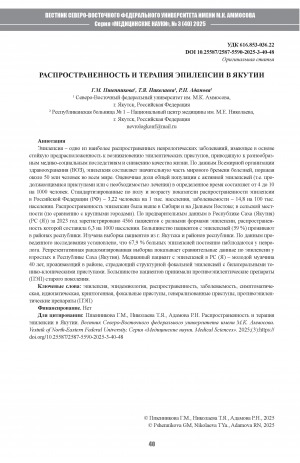
Эпилепсия - одно из наиболее распространенных неврологических заболеваний, имеющее в основе стойкую предрасположенность к возникновению эпилептических приступов, приводящую к разнообразным медико-социальным последствиям и снижению качества жизни. По данным Всемирной организации здравоохранения (ВОЗ), эпилепсия составляет значительную часть мирового бремени болезней, поражая около 50 млн человек во всем мире. Оценочная доля общей популяции с активной эпилепсией (т.е. продолжающимися приступами или с необходимостью лечения) в определенное время составляет от 4 до 10 на 1000 человек. Стандартизированные по полу и возрасту показатели распространенности эпилепсии в Российской Федерации (РФ) - 3,22 человека на 1 тыс. населения, заболеваемости - 14,8 на 100 тыс. населения. Распространенность эпилепсии была выше в Сибири и на Дальнем Востоке; в сельской местности (по сравнению с крупными городами). По предварительным данным в Республике Саха (Якутия) (РС (Я)) за 2023 год зарегистрировано 4566 пациентов с разными формами эпилепсии, распространенность которой составила 6,3 на 1000 населения. Большинство пациентов с эпилепсией (59 %) проживают в районах республики. Изучена выборка пациентов из г. Якутска и районов республики. По данным проведенного исследования установлено, что 67,9 % больных эпилепсией постоянно наблюдаются у невролога. Репрезентативная рандомизированная выборка показывает сравнительные данные по эпилепсии у взрослых в Республике Саха (Якутия). Медианный пациент с эпилепсией в РС (Я) - молодой мужчина 40 лет, проживающий в районе, страдающий структурной фокальной эпилепсией с билатеральными тонико-клоническими приступами. Большинство пациентов принимали противоэпилептические препараты (ПЭП) старого поколения.
Epilepsy is one of the most common neurological diseases, which is based on a persistent predisposition to epileptic seizures, leading to a variety of medical and social consequences and a decrease in the quality of life. According to the World Health Organization, epilepsy accounts for a significant portion of the global burden of disease, affecting approximately 50 million people worldwide. The estimated proportion of the general population with active epilepsy (i.e., ongoing seizures or requiring treatment) at any given time is between 4 and 10 per 1,000 people. The prevalence of epilepsy in the Russian Federation, standardized by sex and age, is 3.22 people per 1,000 population, and the incidence is 14.8 per 100,000. The population. The prevalence of epilepsy was higher in Siberia and the Far East compared to the European part of the Russian Federation. According to preliminary data, 4,566 patients with various forms of epilepsy were registered in the Republic of Sakha (Yakutia) in 2023, with a prevalence of 6.3 per 1,000 population. The majority of patients with epilepsy (59 %) live in the districts of the republic. A sample of patients from Yakutsk and the districts of the republic was studied. According to the conducted research, it was found that 67.9 % of epilepsy patients are constantly being monitored by a neurologist. A representative randomized sample shows comparative data on adult epilepsy in the Republic of Sakha (Yakutia). The median patient with epilepsy in Yakutia is a 40-year-old young man living in the district suffering from structural focal epilepsy with bilateral tonic-clonic seizures. Most of the patients were taking old-generation antiepileptic drugs.
Пшенникова, Г. М. Распространенность и терапия эпилепсии в Якутии / Г. М. Пшенникова, Т. Я. Николаева, Р. Н. Адамова ; Медицинский институт Северо-Восточного федерального университета им. М. К. Аммосова, Республиканская больница N 1 - Национальный центр медицины им. М. Е. Николаева // Вестник Северо-Восточного федерального университета им. М. К. Аммосова. Серия "Медицинские науки". - 2025, N 3 (40). - С. 40-48. - DOI: 10.25587/2587-5590-2025-3-40-48
DOI: 10.25587/2587-5590-2025-3-40-48

Количество страниц: 5 с.
Epilepsy is one of the most common neurological diseases that occurs at different stages of life in men and women. WHO, the International League Against Epilepsy (ILAE) and the International Bureau for Epilepsy (IBE) conducted a global campaign to highlight the problem of epilepsy to disseminate better information and raise awareness of this disease. The authors compiled a questionnaire of 12 questions to analyze public awareness of epilepsy. The survey was conducted among various groups of the population, students, and those working outside the medical field. It was found that more than half of the respondents (86.54 %) know about the existence of such a diagnosis, but 1.92 % of respondents have never heard of this disease. 25 % of all respondents have a patient with epilepsy in their environment. For 23.1 % of respondents, patients with epilepsy cause a feeling of anxiety and fear, and 34.6 % of people who completed the survey may experience anxiety and fear when they see an epileptic seizure. A quarter of respondents would be able to provide proper first aid during an epileptic seizure, and only a third of respondents (32.7 %) know that antiepileptic drugs are used in treatment. 25 % of respondents believe that epilepsy is not curable, 36.5 % do not know about the treatment of this disease. For centuries, an incorrect idea of epilepsy has been formed. Various myths have circulated, ranging from the fact that this disease was called a disease of geniuses, to the fact that epileptics were labeled as potential criminals. Despite the fact that we live in the 21st century, some prejudices about epilepsy remain to this day, which indicates insufficient public awareness of the disease and the need to popularize knowledge about this disease through the media and social networks.
Никитина, Л. А.
Оценка информированности населения об эпилепсии / Никитина Л. А., Пшенникова Г. М. ; Северо-Восточный федеральный университет им. М. К. Аммосова, Медицинский институт // Вестник Северо-Восточного федерального университета им. М. К. Аммосова. Серия "Медицинские науки". - 2024. - N 3 (36). - C. 25-29.
Количество страниц: 7 с.
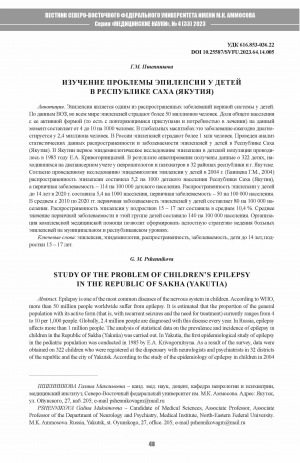
Epilepsy is one of the most common diseases of the nervous system in children. According to WHO,more than 50 million people worldwide suffer from epilepsy. It is estimated that the proportion of the generalpopulation with its active form (that is, with recurrent seizures and the need for treatment) currently ranges from 4to 10 per 1,000 people. Globally, 2.4 million people are diagnosed with this disease every year. In Russia, epilepsyaffects more than 1 million people. The analysis of statistical data on the prevalence and incidence of epilepsy inchildren in the Republic of Sakha (Yakutia) was carried out. In Yakutia, the first epidemiological study of epilepsyin the pediatric population was conducted in 1985 by E.A. Krivogornitsyna. As a result of the survey, data wereobtained on 322 children who were registered at the dispensary with neurologists and psychiatrists in 32 districtsof the republic and the city of Yakutsk. According to the study of the epidemiology of epilepsy in children in 2004 (Baisheva G.M., 2004), the prevalence of epilepsy was 5.2 per 1,000 children of the Republic of Sakha (Yakutia),and the primary incidence was 114 per 100,000 children. Prevalence of epilepsy in children under 14 years ofage in 2020 was 5.4 per 1,000 population, the primary incidence was 50 per 100,000 population. On average,from 2010 to 2020, the primary incidence of epilepsy in children is 80 per 100,000 population. The prevalenceof epilepsy in adolescents aged 15 – 17 years averaged 10.4 %. The average value of primary morbidity in thisgroup of children was 140 per 100,000 population. The organization of comprehensive medical care will make itpossible to form a strategy for the management of epilepsy patients at the municipal and republic levels.
Пшенникова, Г. М. Изучение проблемы эпилепсии у детей в Республике Саха (Якутия) / Г. М. Пшенникова ; Северо-Восточный федеральный университет им. М. К. Аммосова, Медицинский институт // Вестник Северо-Восточного федерального университета им. М. К. Аммосова. Серия: История. Политология. Право. - 2023. - N 4 (33). - C. 48-54. - DOI: 10.25587/SVFU.2023.69.54.004
DOI: 10.25587/SVFU.2023.64.14.005
Количество страниц: 3 с.
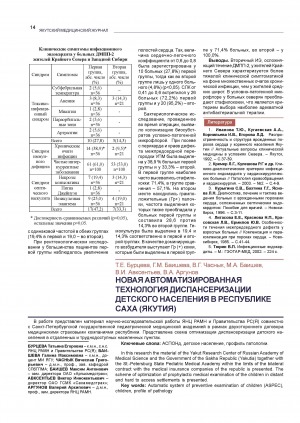
The paper presents the material of the research work of the NRC RAMS and the Government of the Republic of Sakha (Yakutia) in conjunction with the St. Petersburg State Pediatric Medical Academy under a bilateral agreement with medical insurance companies of the republic. The scheme of optimizing the medical examination of the child population in remote and inaccessible settlements is presented
Новая автоматизированная технология диспансеризации детского населения в Республике Саха (Якутия) / Т. Е. Бурцева, Г. М. Баишева, В. Г. Часнык, М. А. Баишев, В. И. Авксентьев, В. А. Аргунов// Якутский медицинский журнал. – 2006. – N 4 (16). – С. 14-16.
Количество страниц: 4 с.
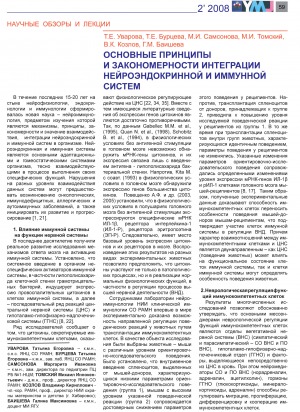
Neuroendocrine and immune systems are the main adaptive and homeostatic systems of the body, closely interacting in the process of performing their specific functions. Violations at different levels of interaction of these systems can precede the oncological, immunodeficiency, allergic and autoimmune diseases, and also initiate their development and progression
Основные принципы и закономерности интеграции нейроэндокринной и иммунной систем / Т. Е, Уварова, Т. Е. Бурцева, М. И. Самсонова, М. И. Томский, В. К. Козлов, Г. М. Баишева // Якутский медицинский журнал. – 2008. – N 2 (22). – С. 59-82.
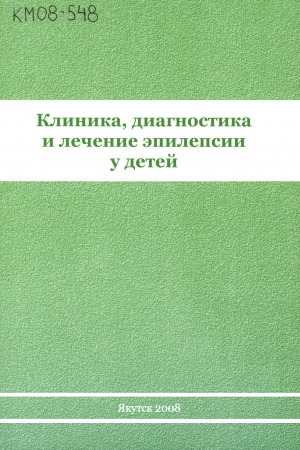
Издательство: Издательство ЯГУ
Год выпуска: 2008
Количество страниц: 48 с.