Количество страниц: 13 с.
In the global and local administrative practice, the national district is used as one of the forms of implementation of the state national policy in relation to ethnic minorities. In this article the authors consider the main conceptual provisions of this legal form, as well as the process of its formation in the historical and modern context. A comprehensive approach allows to achieve the goal of the article. In particular, the article makes extensive use of a systematic approach to consider the status of the national district, its historical and contemporary characteristics. Based on previous studies of national districts, as well as using materials from the political life of the Republic of Sakha (Yakutia), the analysis of the formation of the status of the national district was carried out. The previous experience has demonstrated that formal declaration of new administrative units is not enough to support ethnic minorities. However, it is the first step towards public and socio-economic development of the district. In this regard, state support for national administrative-territorial formations is vital. These formations are designed to preserve indigenous culture, the traditional way of life, and historical monuments of the northern peoples. They also promote the development of regionally specific economic activities.
Парфенова, О. А.
Национальный район арктической зоны Якутии: понятия и характеристики / О. А. Парфенова, А. П. Попова ; Северо-Восточный федеральный университет им. М. К. Аммосова, Исторический факультет // Арктика. XXI век. - 2024. - N 4 (38). - С. 164-176. - DOI: 10.25587/2310-5453-2024-4-164-176
DOI: 10.25587/2310-5453-2024-4-164-176
Количество страниц: 10 с.
The specifics of the situation in the Sakha Republic (Yakutia) give rise to the need to update the intercultural policy, which can serve as a response to the challenges of ethnic diversity. The issue is discussed in the framework of cultural sustainability of the Arctic development. The potential of intercultural communication for increasing sustainability in the context of changes in the Arctic region is considered. The solution to this problem will indicate the key role that informal intercultural communication should play in the context of civil society in the education and integration of citizens living in an international environment. The topic of the article corresponds to the priority area of research in the ethno-social and ethno-cultural development of the northern (Arctic) territories, as well as in the field of preservation and development of cultures of the North-East of the Russian Federation in the context of globalization processes. The implementation of the main concepts of this article is of great importance for solving various socio-cultural problems of the Republic of Sakha (Yakutia), including those related to education, interethnic relations and integration. The results of the study will help to identify ways and prerequisites for the effective use of informal intercultural communication. This kind of communication will be aimed at the integration of migrants into society, as well as promote more profound and extended intercultural interaction with the indigenous residents of the Republic of Sakha (Yakutia).
Корякина, А. А.
Неформальная межкультурная коммуникация в условиях арктического региона / А. А. Корякина ; Северо-Восточный федеральный университет им. М. К. Аммосова // Арктика. XXI век. - 2024. - N 4 (38). - С. 134-143. - DOI: 10.25587/2310-5453-2024-4-134-143
DOI: 10.25587/2310-5453-2024-4-134-143
Количество страниц: 15 с.
- 1. Макушенко Яна Михайловна. Формы включения общественности в развитие Арктического региона = Forms of public involvement in the development of the Arctic region
- 2. Парфенова Ольга Афанасьевна, Михайлов Арчылаан Григорьевич. Придание особого правового статуса образовательным организациям в Арктической зоне для развития школьного образования = Granting special legal status to educational organisations in the Arctic zone for the development of school education
- 3. Винокурова Марфа Александровна, Слепцова Дарьяна Ильинична. Возможности реализации проекта молодежного туризма в Республике Саха (Якутия) = Opportunities for implementing a youth tourism project in the Republic of Sakha (Yakutia)
- 4. Ларионова Анна Леонидовна, Федорова Нюргуяна Аркадьевна. Роль традиционных народных технологий в устойчивом развитии ювелирной промышленности Якутии = The role of traditional folk technologies in the sustainable development of the jewellery industry of Yakutia
- 5. Петров Григорий Иннокентьевич, Слепцов Леонид Васильевич. Развитие событийного туризма в арктических районах Республики Саха (Якутия) = Development of event tourism in the Arctic regions of the Republic of Sakha (Yakutia)
- 6. Петрова Диана Петровна, Жигун Леонид Александрович, Тимофеева Екатерина Николеавна. Анализ государственного управления лесным хозяйством на примере Республики Саха (Якутия) в условиях рискогенности = Analysis of state forest management in the Republic of Sakha (Yakutia)under risky conditions
- 7. Спиридонов Андрей Егорович, Сибилева Елена Валерьевна. Совершенствование системы управления на предприятии = Improving the management system at the enterprise
- 8. Атласова Саргылана Серафимовна. 175 лет Александру Михайловичу Сибирякову
- 9. Арктика. XXI век. Гуманитарные науки, 2024, №3 (37)
This article examines the development policy of the Russian Arctic in theform of the formation of governance institutions. Within the framework of the federal structure of our country, the implementation of regional policy of local territories is being updated. In the 2000s, the targeted, compensatory approach was updated,where the most promising macro-subjects are identified. The Far East and the Arctic region are especially noted due to the combination of socio-economic factors,natural and climatic conditions, transport infrastructure, and geopolitical position.In the field of regulatory and legal sphere, strategies, concepts, and regulations for the development of the Arctic region were adopted. The formation of institutional management in the form of the creation of separate authorities is observed. Until themid-2000s, the functions of developing the Arctic were duplicated in various federal departments. In 2014, a separate State Commission for the Development of the Arctic was created. In 2019, the previously functioning Ministry for the Development of the Russian Far East was supplemented with the tasks of developing the Arctic.There is also a separate state Corporation for the Development of the Far East and Arctic, responsible for investment potential. The effectiveness of Arctic policy also depends on a clear definition and division of functions and powers between federal and regional authorities. Regional policy is an integrating factor in the interaction of the two levels of government, which has a positive effect on the overall economic development of the country and federal relations
Григорьев, Н. А.
Развитие институционального управления Арктическим регионом России / Н. А. Григорьев ; Северо-Восточный федеральный университет им. М. К. Аммосова // Арктика. XXI век. - 2024. - N 3 (37). - С. 108-122. - DOI: 10.25587/2310-5453-2024-3-108-122
DOI: 10.25587/2310-5453-2024-3-108-122
Издательство: НБ РС(Я)
Год выпуска: 2025
- Медиатека НБ Якутии: смотри и слушай > Видеозал: видеосюжеты, фильмы, мультфильмы, буктрейлеры,
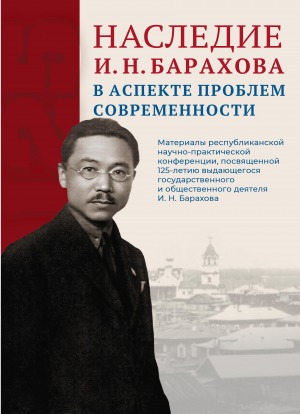
- К 100-летию ЯАССР: видные государственные деятели Якутии XX-XXI вв. > Чиряев Гавриил Иосифович,
- Говорит и показывает Пушкинка,
- Чиряев Гавриил Иосифович > Литература о жизни и деятельности,
- Общественные науки. Образование.
Год выпуска: 2019
Год выпуска: 2025
Год выпуска: 2025
Год выпуска: 2025
Количество страниц: 6 с.
This article is an overview, it presents various points of view of researchers on the development and existence of youth policy in the Arctic territory at the present time. When writing this article, we used such methods as search and comparative methods, compared the situation of youth policy in the Arctic now, between several subjects of the Arctic zone. Based on our comparative analysis, we came to the following conclusions: youth policy in the Arctic territory is as developed as in other regions of the Russian Federation, and is based on the Federal Law on Youth Policy, and has its own regional by-laws and regulations aimed at solving the basic problems of a particular subject related to Due to regional peculiarities, there is also more emphasis on the development and support of youth initiatives. As part of writing this article, we conducted a sociological survey in a village located beyond the Arctic circle, with a population of 500 people.
Кириллина, Я. А.
Молодежная политика в Арктической зоне Российской Федерации / Я. А. Кириллина, С. К. Шишкина ; Северо-Восточный федеральный университет им. М. К. Аммосова, Институт языков и культуры народов Северо-Востока Российской Федерации, Исторический факультет // Вестник Северо-Восточного федерального университета им. М. К. Аммосова. Серия "История. Политология. Право". - 2024. - N 3 (35). - С. 82-87. - DOI: 10.25587/2587-5612-2024-3-82-87
DOI: 10.25587/2587-5612-2024-3-82-87